1. US & European Menu Buzzword Decoder
Before you order, scan the menu description for culinary preparation cues that reveal how much oil, butter, or heavy cream the dish absorbs in the pan:
| Menu Wording | What Happens in the Kitchen | Hidden Calorie Impact | Smart Modification to Ask For |
|---|---|---|---|
| Pan-Seared / Sautéed / Confit | Cooked in 2–3 tbsp (30–45 ml) of oil and basted with butter | +200 to +320 kcal | "Could I have that grilled with light oil or no finishing butter?" |
| Crispy / Tempura / Milanese / Schnitzel | Dredged in flour/breadcrumbs and shallow- or deep-fried | +280 to +450 kcal | Swap for blackened, charbroiled, or oven-roasted protein |
| Au Gratin / Alfredo / Carbonara / Bisque | Emulsified with heavy cream (36% fat), egg yolks, butter, and cheese | +350 to +550 kcal | Opt for marinara, pomodoro, chimichurri, or wine/broth reduction |
| Glazed / Teriyaki / Sticky / BBQ | Reduced with sugar, honey, or mirin plus oil | +140 to +240 kcal | Ask for glaze on the side or choose dry rub / herbs & lemon |
| Poached / Steamed / Ceviche / Dry-Grilled | Cooked in water, citrus, broth, or open grates | +0 to +60 kcal | Green light—highest protein-to-calorie ratio on the menu |
Scan Any Printed Restaurant Menu or Plate in Seconds
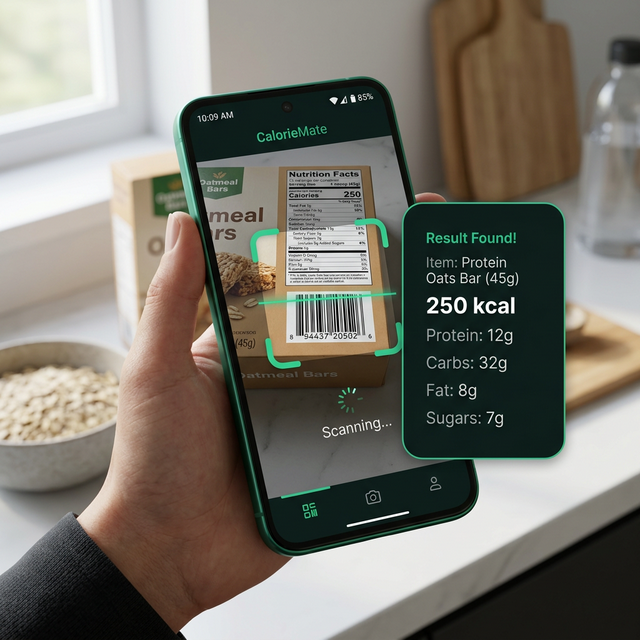
Use CalorieCalc's AI Restaurant Menu Scanner (1 free scan every day, unlimited on Plus) to highlight the best high-protein dishes on any menu, or snap your plate with the AI Photo Scanner.
2. Visual Hand-Portion Estimation at the Table (US oz & EU g)
While US chain restaurants with 20+ locations and UK large chains (250+ employees) are legally required to print calories on menus, independent European bistros and local US restaurants rarely list nutrition facts. Use your hand to estimate plated weights discreetly:
| Visual Reference | Cooked Weight (US / EU) | Restaurant Food Examples | Estimated Macros |
|---|---|---|---|
| 1 Flat Palm (Thickness of Deck of Cards) | 3.5 – 4.0 oz / 100 – 115 g cooked | Chicken breast, sirloin steak, salmon fillet | 180–240 kcal · 28–32 g protein |
| 1 Tight Fist | 1 cup / ~150–180 g cooked | Steamed rice, mashed potatoes, pasta, roasted veg | 200–240 kcal (starch) / 45 kcal (veg) |
| 1 Cupped Hand | 1/2 cup / ~90–100 g | Risotto, gnocchi, fries, bread roll | 140–220 kcal · 25–35 g carbs |
| 1 Full Thumb | 1 tbsp / 15 ml (14 g) | Olive oil, butter pat, mayo, aioli, parmesan | 100–120 kcal · 11–14 g fat |
Frequently Asked Questions
How accurate are printed calories on US and UK chain restaurant menus?
FDA and UK Food Standards Agency regulations allow a +/- 20% margin of error on printed restaurant menu calories, and line cooks often use heavier pours of dressing or cooking oil during busy dinner rushes. Adding a 10–15% buffer to printed menu numbers keeps your weekly deficit accurate.
How should I log alcohol when dining out?
Pure ethanol contains 7 kcal per gram. A 5 fl oz (150 ml) glass of dry wine is ~125 kcal, a 12 fl oz (355 ml) light beer is ~100–110 kcal, a UK/EU pint (568 ml) of lager is ~210–240 kcal, and a standard spirit (1.5 oz / 45 ml vodka or gin) with soda water is ~97 kcal. Cocktails made with simple syrup or liqueurs (margaritas, espresso martinis) range from 240 to 380 kcal per glass.
Dine Out Without Guesswork Using CalorieCalc
Download CalorieCalc to get 1 Free AI Restaurant Menu Scan every day, 100% Free Food Diary & Barcode logging, and Plus/Pro access to our AI Receipt Scanner and unlimited AI Photo logging.
 Scan with Android Camera